Article: How to Start a Garden from Seeds: A Beginner's Step-by-Step Guide
How to Start a Garden from Seeds: A Beginner's Step-by-Step Guide
Growing plants from seeds is one of the most rewarding ways to build a beautiful garden. Whether you want colourful flowers, fresh vegetables, aromatic herbs, or fruit-bearing plants, starting from seeds allows you to enjoy the complete gardening journey while choosing from a wide variety of plant types.
If you're new to gardening, the process may seem overwhelming at first. Fortunately, with the right preparation and a little patience, anyone can successfully grow healthy plants from seeds.
This guide explains everything you need to know about how to start a garden from seeds, from selecting quality seeds to caring for young seedlings.
Why Start Your Garden from Seeds?
Growing from seeds offers many advantages for gardeners of all experience levels.
Some of the benefits include:
- Access to a wider selection of plant varieties
- Opportunity to grow flowers, vegetables, herbs, and fruits from the beginning
- Enjoying every stage of plant development
- Planning your garden according to your available space
- Learning valuable gardening skills
Starting with quality seeds gives your garden a strong foundation for healthy growth.
Choose the Right Seeds
The first step is selecting seeds that match your gardening goals.
Think about:
- Available sunlight
- Indoor or outdoor growing space
- Local climate
- Garden size
- Preferred flowers, vegetables, herbs, or fruit plants
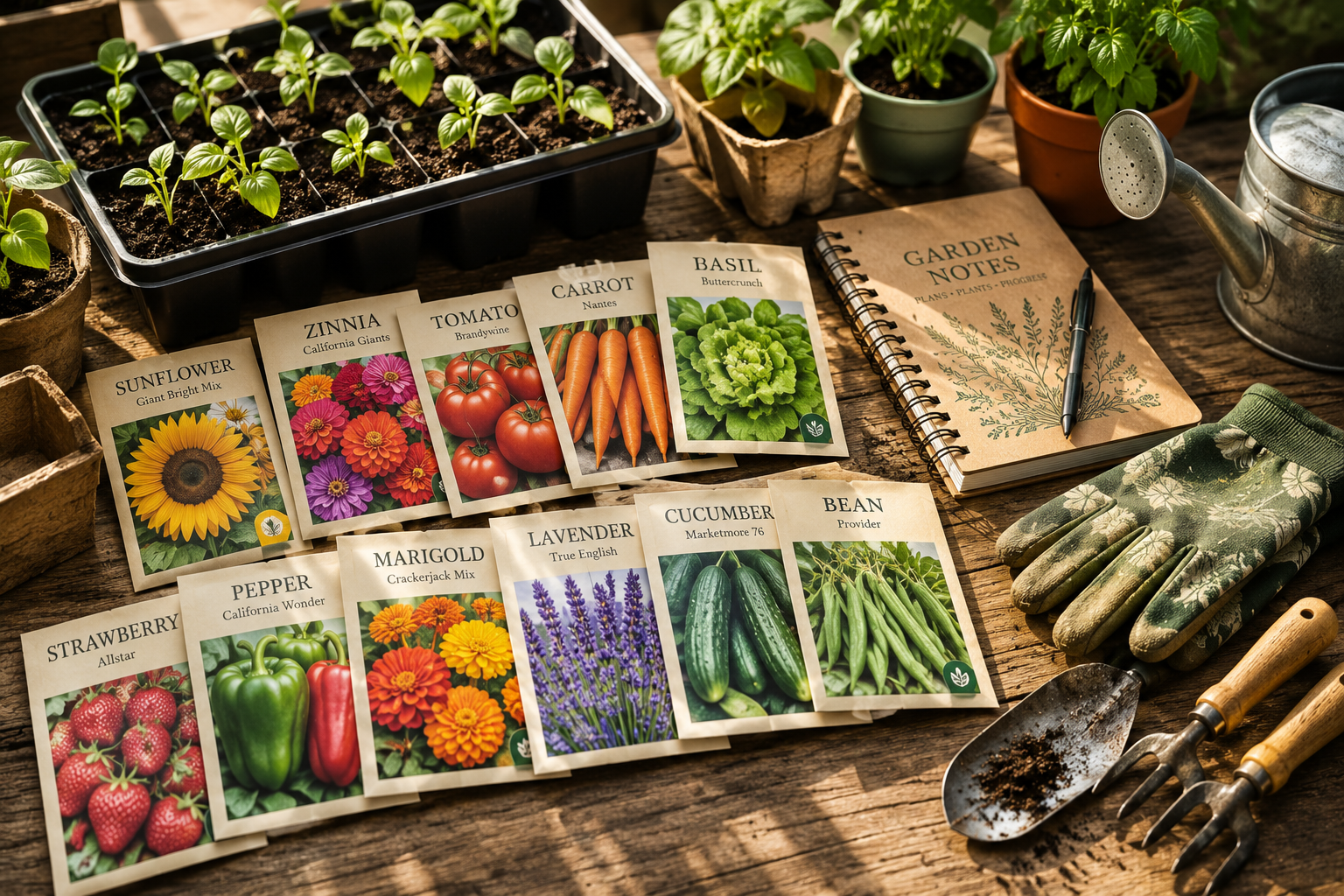
Many beginners enjoy starting with easy-to-grow varieties such as:
- Marigolds
- Sunflowers
- Basil
- Lettuce
- Radishes
- Tomatoes
- Spinach
- Coriander
- Beans
Reading the planting instructions on each seed packet helps you understand the recommended sowing depth, spacing, and growing conditions.
Gather Your Seed Starting Supplies
Before planting, prepare a few basic gardening essentials.
You'll need:
- Seed trays or small pots
- Seed-starting mix
- Watering spray bottle or watering can
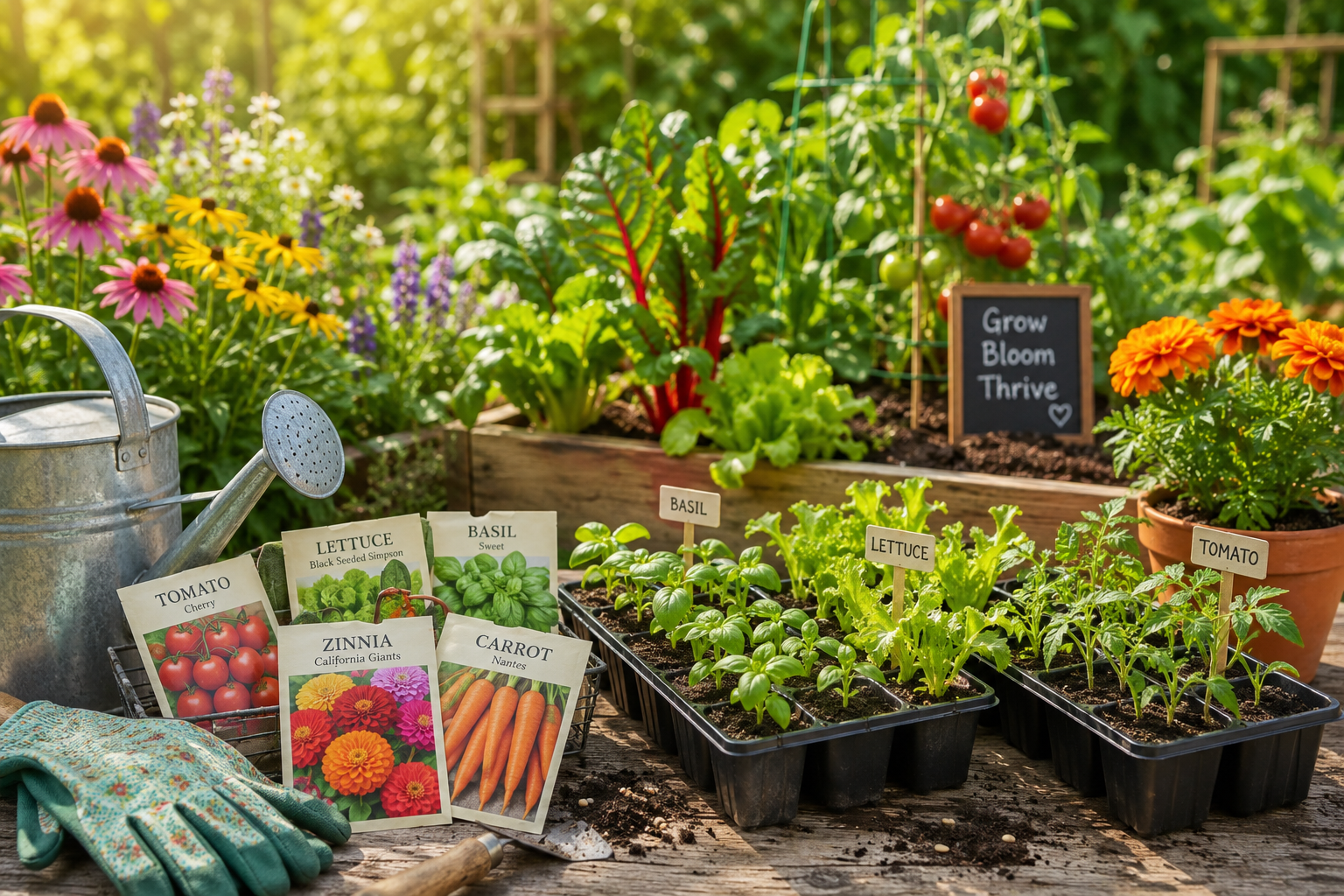
- Plant labels
- Gardening gloves
- Bright growing location or sunny window
Using a light, well-draining seed-starting mix helps young roots develop more easily than heavy garden soil.
Plant Seeds Correctly
Planting depth is important for successful germination.
A simple rule is to sow seeds at a depth about two to three times their diameter. Tiny seeds may only need to be pressed gently onto the soil surface, while larger seeds can be planted slightly deeper.
After sowing:
- Cover seeds lightly with soil if required.
- Mist the soil gently with water.
- Keep the growing medium evenly moist.
- Avoid compacting the soil.
Proper planting improves the chances of healthy and even germination.
Provide the Right Growing Conditions
Seeds need a combination of moisture, warmth, and light to begin growing.
For the best results:
- Keep the soil consistently moist but not waterlogged.
- Place seed trays where they receive bright light.
- Maintain suitable temperatures according to the seed variety.
- Ensure good air circulation around seedlings.
Once seedlings emerge, adequate light becomes especially important for producing sturdy, healthy plants.
Caring for Young Seedlings
As seedlings grow, they require gentle care.
Important practices include:
Water Carefully
Water when the soil begins to dry slightly. Avoid excessive watering, which can stress young plants.
Provide Plenty of Light
Strong light encourages compact, healthy growth and helps prevent weak, stretched seedlings.
Thin Crowded Seedlings
If several seedlings grow too closely together, remove the weaker ones to provide space for stronger plants.
Improve Airflow
Good airflow helps maintain healthy growing conditions around young plants.
Preparing Seedlings for the Garden
When seedlings develop several sets of true leaves, they are ready to begin adjusting to outdoor conditions.
This gradual process, often called hardening off, involves placing seedlings outdoors for increasing periods over several days before transplanting them into their final growing location.
This helps plants adapt more comfortably to natural sunlight, wind, and temperature changes.
Common Mistakes to Avoid
Many beginner gardeners experience similar challenges.
Try to avoid:
- Planting seeds too deeply
- Overwatering the soil
- Allowing soil to dry completely
- Using poor-quality growing medium
- Providing insufficient light
- Transplanting seedlings too early
- Ignoring spacing recommendations
Learning from these common mistakes helps improve gardening success over time.
Helpful Tips for Gardening Success
To build confidence while growing from seeds:
- Start with a few easy varieties.
- Label every seed tray.
- Keep a simple gardening journal.
- Observe plant growth regularly.
- Follow the growing instructions for each plant.
- Continue learning through experience.
Gardening becomes easier and more enjoyable with each growing season.
Conclusion
Starting a garden from seeds is an enjoyable way to experience every stage of a plant's growth. By choosing quality seeds, preparing the right growing environment, and giving seedlings consistent care, you can create a thriving garden filled with beautiful flowers, fresh vegetables, fragrant herbs, and productive fruit plants.
Every successful garden begins with a single seed. With patience, regular care, and a willingness to learn, you'll build valuable gardening skills while creating a vibrant outdoor or indoor space to enjoy throughout the year.
Explore our collection of flower seeds, vegetable seeds, fruit seeds, and herb seeds to begin your gardening journey and discover new varieties for every season.